Yada!
Murmurs
February 28, 2010
Murmurs
February 28, 2010
I had a yada experience yesterday, the first I've had in a long time. Direct confrontation, vitriolic refusal, fearful contempt. It's hard to convey the nascent power and negativity contained in just one word. I'm probably a little over sensitive but yada is one word I won't countenance.
We were having a make-up lesson which we do once a month to allow students to catch up with classes they have missed. At Wise Hat English we not only give make-ups but we carry them over so sometimes we even end up giving them to students who have quit! Students who miss two classes in a month have the option of getting one make-up class or paying half the fee for the month. We are also very laid back about cancellations and don't require notice in advance. All in all we have a good response and no real attempts to take advantage.
Make-up classes invariably have students from different classes as we try to arrange them according to our students schedules while taking into account personalities and experience. Our make-up day is usually long and yesterday was no exception. I won't be writing much today!
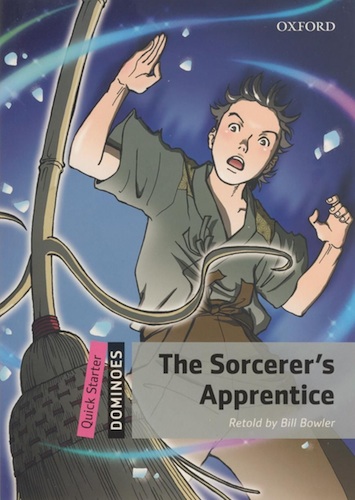
During make-up classes we try to cover topics and activities students have missed though invariably there is some overlap because students missing from different classes and different weeks have done different things. Thus it was that I tried to introduce an activity that some students had done more in the month than others. Our theme for the month was weather and time and the activity in question was Wizard Weather. This, a variation of Snow Escape, is invariably popular but not on this occasion. Basically nobody wanted to do it and two of the group, who incidentally were all girls, began yadaing (yadering? I'm not sure which).
Whenever the word yada crops up I take it as a sign that something has gone badly wrong. It's a horrible sound and I admit that all too easily I can react badly to it, making the situation even more negative. But yada completely shatters any English atmosphere that might have built up. And of course, it should be completely unnecessary. Japanese children should be able to communicate their strong dislike without resorting to Japanese. A simple "No thank you!" or a "No way!" are much better and should be sufficient. "I don't want to..[complete sentence here]" is much more complicated and doesn't have the same impact. Finding an equivalent that has the same emotional impact is important when wanting children to stay in English. "No thank you!" wasn't really enough in this case, but a spirited and varied chant of "No way!" was enough to dissipate the negativity that had emerged, both in myself and in the girls. We agreed to skip Wizard Weather and do a shopping activity instead.
I'd be very interested to hear what gets your goat and any strategies you have for dealing with it. My strategy with yada is probably a little bit too confrontational. I jump on it. I guess I want children to see it as taboo. I'm happy to deal with and accept the grievence though I usually push the situation again to get a response in English after I have taught it on the spot. But I think a better strategy would probably be introduce a "No Way!" activity so that children would have something they could use. Anyway, hope to get some comments and I'm crawling away to rest up. Until next time.
Quick Activities
Untried Ideas
February 21, 2010
One topic that cropped up in the ETJ Owners list this past week was the subject of answering questions, or rather the kinds of answers we require as teachers. The big decision is whether we should insist on full answers using complete sentences or whether we allow students to use truncated replies. The benefit of full answers is that it gives students more exposure to grammatical structures and increase the chance for them to learn them. The disadvantage is that full sentences can often sound stilted and unnatural. Native speakers will happily take shortcuts and drop words during conversation so shouldn't learners know how to do likewise?
My typical approach is to divide a lesson into distinct parts. During "practise time" I get students to make complete grammatical sentences but outside this framework I focus more on flow, speed and communication. Having said this, I hit upon a simple activity for older children this week that combines both forms. It's still in the experimental stage but I'd like to share it, and hopefully get some feedback. I've yet to settle upon a name for the activity but for now will go with Reply Relay. The activity is suitable for small groups and requires question cards and some six sided dice.
Prior to starting I write the following on the board for reference:
Each player recieves a dice. One player becomes the interviewer and takes a question card. While the interviewer is looking at the card the others each roll their dice. The rolls dictate both who will get asked the question and how to answer. The interviewer asks the question to the player rolling the highest number. If there is a tie then the interview asks all the players concerned. The players must give full answers if they have rolled 2,3,4, or 5 and one word answers if they have rolled a 1 or a 6 (1 will only count on the rare occasions where all players roll a 1). The interviewer should avoid reading the question but instead aim to get eye contact with the players being questioned.
After the interviewer has asked a predetermined number of questions one of the other players takes over the role. Ideally all players should have a go at asking questions.
Use a timer for each interviewer. Keep a record of the total number of questions answered by the group.
Rather than the highest score alone determining who answers the questions instead use tied dice rolls first and highest score second. For example, five players roll 2, 2, 3, 3 and 6. The two players rolling 3 answer the question.
For groups that can't read the teacher could ask the questions. Alternatively, the interviewer could just make up questions onn the spot or ask a particular kind of question.
I've tried out the main method described with a few groups and it seems worth pursuing. One problem with larger groups is that the dice rolls can easily get mixed up and it can be hard to know who has rolled what. Another is that some children like to spin dice rather than roll them and this wastes time. As I type this I think a solution to both problems is to use a paper cup. Players could drop their dice into a paper cup and call out the results. Alternatively, and I think this is better, they could start with the dice in a paper cup and tip the cup upside down onto the table so that the dice is trapped under the cup. Then all players could lift their cups up at the same time. This would add a little bit of tension. Anyway, I welcome some feed back on this idea. Thanks!
Festivals
Worksheets
February 14, 2010

It may be Valentine's Day today but truth be told I've never done much with it in or out of the classroom. A quick search of my computer reveals a solitary worksheet for adults and high school students based on the information found here. It contained a true or false quiz, a version of which can be downloaded by clicking this link. Students were invited to read each statement in turn, discuss it and make a guess before the answer was revealled. One aim was to see how long it would take them to decide that all the statements were true.
I wonder if St Valentine's Day is something done more often in schools in the US than in Britain? I don't remember the event ever being celebrated once while I was at school. It never made an appearance at home either, but Pancake Day did which I guess is why I have a soft spot for it. The same computer search draws forth nearly a dozen files, though in general when I do pancake lessons I like to make them completely practical, or perhaps I should write, physical. Very few schools I've taught at have given me access to an oven range but for pancakes a portable gas cooker actually works better. Children can get as close as you deem advisable. I usually let them get very close and of course they all get a chance to have a toss, if they want one. In my experience the older children get the more concerned they become about drops. This could be because they are concerned about wasting food but I think their reserve comes from fear of making a mistake. One thing I want to get across with pancake lessons is that the only real mistake is trying to avoid making them. One method I've found to encourage them to have a go is to designate one pancake as a a practise pancake. I tell them it doesn't matter if it goes on the floor as we can use it just for throwing practise. If by chance it does end up on the floor we can keep using it and then rinse out the pan before before making ones to eat. Anyway, I'm going to be lazy today and draw this week's entry to a close. If you want to read more than try this link to an old Now's Newsletter. It's got a little bit about NLP reframing and a little bit more about pancakes. Happy holidays!
February 07, 2010
I've mentioned on more than one occasion that I don't like tests. But have I ever mentioned that Wise Hat English is a test centre for Junior Eiken? Some five students took the tests yesterday. Ugh! It's a kind of dilemma for me which I resolve by having as little to do with them as practicable. Notice that I didn't write "as possible". I'd prefer if we had nothing to do with any kind of test but some children want to do them and some parents like them as well.
Of course, it would be possible to remain noble and idealistic but I feel it better to be more flexible. I've been in the situation where parents have put their children whom I was teaching in for tests without telling me. Better to be in the know than kept in the dark. So we do talk to children and parents about tests and offer advice, and we even help out with practise.
I think that if a child is going to take a test it should be because the child wants to and can be confident about the result. Ideally, with enough ability and confidence it can be more a benchmark than a test, in fact, if it is really easy. it can even become a kind of celebration.
I know that lots of teachers say one should never teach to the test . I came across a song on YouTube recently that underscores this point. But my feeling is that if there is a test then it is better to know as much about it as possible. At the very least it is important to practise so that one knows the structure and an avoid throwing marks away by not knowing what to do. But I think it is important to go further and look for ways to chisel as many marks as possible. What's it that accountants for the rich do? Is it tax evasion or tax avoidance? Anything's legitimate if you can get away with it. Isn't it?
I guess it's because I generally despise tests that I believe in teaching to them. Part of it comes from my own experience at secondary school. I was in a group who were put in for some O levels (as the basic National exams were called then) a year early. So that meant that the next year I suddenly found myself with around 18 free periods at school. The school just wanted the prestige of having learners take exams early, they hadn't thought through a policy. So they decided I had too much free time and forced me into dong an additional O level to cut it down. Then there's the story my father used to tell me of when he was teaching French and was faced with a similar situation. A group of boys passed French certificate early so he ended up having to teach them French literature. None of them had the slightest interest so he dictated model answers for just over half the time and played games the rest of the time. All of them passed including four who had failed regular French. Probably very few of them retained anything beyond the test but they were all happy to have the extra piece of paper. After all that's the point of tests, right?. I feel I've mentioned this story before.
Anyway, I'll stop short today by mentioning a titbit that Cedric Noto mentioned at least week's Hiroshima ETJ meeting. He told us that in the interview for Eiken Step Three interviewees could get "free points" by making eye contact with the examiners. I thought that was a great way of putting it so this week I mentioned this to my first grade junior high school students. It definitely encouraged them to practise looking at each other during dialogue practise. Free points! Free points!
Quick Activities
Untried Ideas
January 31, 2010
Today I learnt a new game, well almost. I
guess it would be more accurate to say that I learnt a new name. I
attended the ETJ Hiroshima January presentation on Elementary School
English, jointly presented by Cedric Noto, Carl Zeman and
Carla
Wilson . Teachers living within easy reach of Hiroshima missed a treat.
I hope the presentation gets a proper write up. Carl took on
team teaching, Carla focused on activities to get the children
communicating and Cedric tackled how to make the best of Eigo Note.
It was the first time I had seen it and from a cursory glance
appears that the Keyword game
is a staple. Interestingly, Cedric and
Carl had differing opinions about it. Cedric found it engaging. Carl
found it violent. I guess the answer depends upon the level
of competition experienced.
The version Cedric taught was simple. Players split into pairs and
place a small object such as an eraser within easy reach. The teacher
announces a target word, perhaps also showing a flashcard and then
begins to list words within the same vocabulary category. When the
teacher announces the target word that is the signal to snatch the
object. The player snatching the object is the winner and the slower
player is the loser. Not that Cedric was suggesting focusing on this.
But that, I'm sure is how children, especially competitive ones,
perceive it.
Though the name was unfamilar, the basic game was not. I used a
different version of it when I first started teaching children. In the
version I knew there were several objects but less than the number of
players who formed groups. The player who missed out on getting an
object lost a life and the game would continue until one player was
out. I think we used to spell some word which might have been "slow" or
"butterfingers" (though that strikes me as too long) or "stupid" (I
hope I wasn't crass enough to use that, but I can't swear to it). I
just can't remember, but I do remember noticing that children liked the
game but that with class one child was just physically too slow and
always lost. That made me uncomfortable and was one of the rurning
points that got me to seriously question using competitive games at all.
Anyway, rather than write more about that or
the game I'd like instead to
focus on some alternatives. The basic excitement of the game springs
from not knowing when the key will be triggered and the physical
movement involved in snatching the target object. Accordingly any
replacement should probably be just as physical, though I can't help
but mention one mad idea that isn't. In fact I'll start out with it:
In case you are wondering why have the same game in two forms, I want to emphasise that presention and storyline are important elements for success. Sometimes a game can fail with one presention and succeed with another. It's all about capturing attention and stimulating the imagination. Oh, a memory has returned. I think the game I used to play was called "Grab it".
This last idea is based upon something I have done with kindergarten aged students. Rather than doing slam/karuta we sometimes do "finger touch". We all use one finger and make a kind of wheel with each finger being a spoke. The idea is then to move to the flashcard named without breaking contact. With even younger children where mothers are present mother and child can work in pairs.
I want to stress that I haven't tried any of the keyword game varients listed above. If you do try any of them out, please let me know how it goes. The problem I have with the keyword game is that at its core it is based upon scarcity. Do we really want to model the notion that snatching up goods is a legitimate action? Yes, it is only a game, and it is supposed to be in fun, but the root behaviour is based on is ugly, naked aggression. We can do better.
- Robert Sieveking
- Chris (Hunt)
- Steven Williams
- Chris (Hunt)
- Steven Williams
- Robert Sieveking
- Brett Iimura
- Renae
- Steven Williams
- Chris (Hunt)
- michelle
- stash
- Chris (Hunt)
- Jon Otto
- Chris (Hunt)
- Dr. Michael Cubbin
- Jon Otto
- Chris (Hunt)
- Jon Otto
- Ben Shearon
- Harry
- Phil
- Alison Miyake
- Kelly Brown